Here’s something most homeowners don’t realize: your air filter can be doing a great job catching dust, and quietly killing your AC at the same time. If your system is already showing signs of trouble, our residential AC services team can help.
It’s one of the most common filter mistakes owner Jeremy Lawrence sees after 10+ years of HVAC work in The Woodlands and surrounding North Houston communities. Homeowners buy the highest-rated filter they can find, swap it every 30 days like clockwork, and still end up with frozen coils, weak airflow, and a system that’s working twice as hard as it should be.
So what’s actually going on? And how often should you change your home’s air filter?
The real answer starts with knowing what kind of filter you have.
Not All Air Filters Work the Same Way
Before you can set a replacement schedule, you need to know which type of filter your system uses. There are two main categories in most North Houston homes:
1-Inch Filters
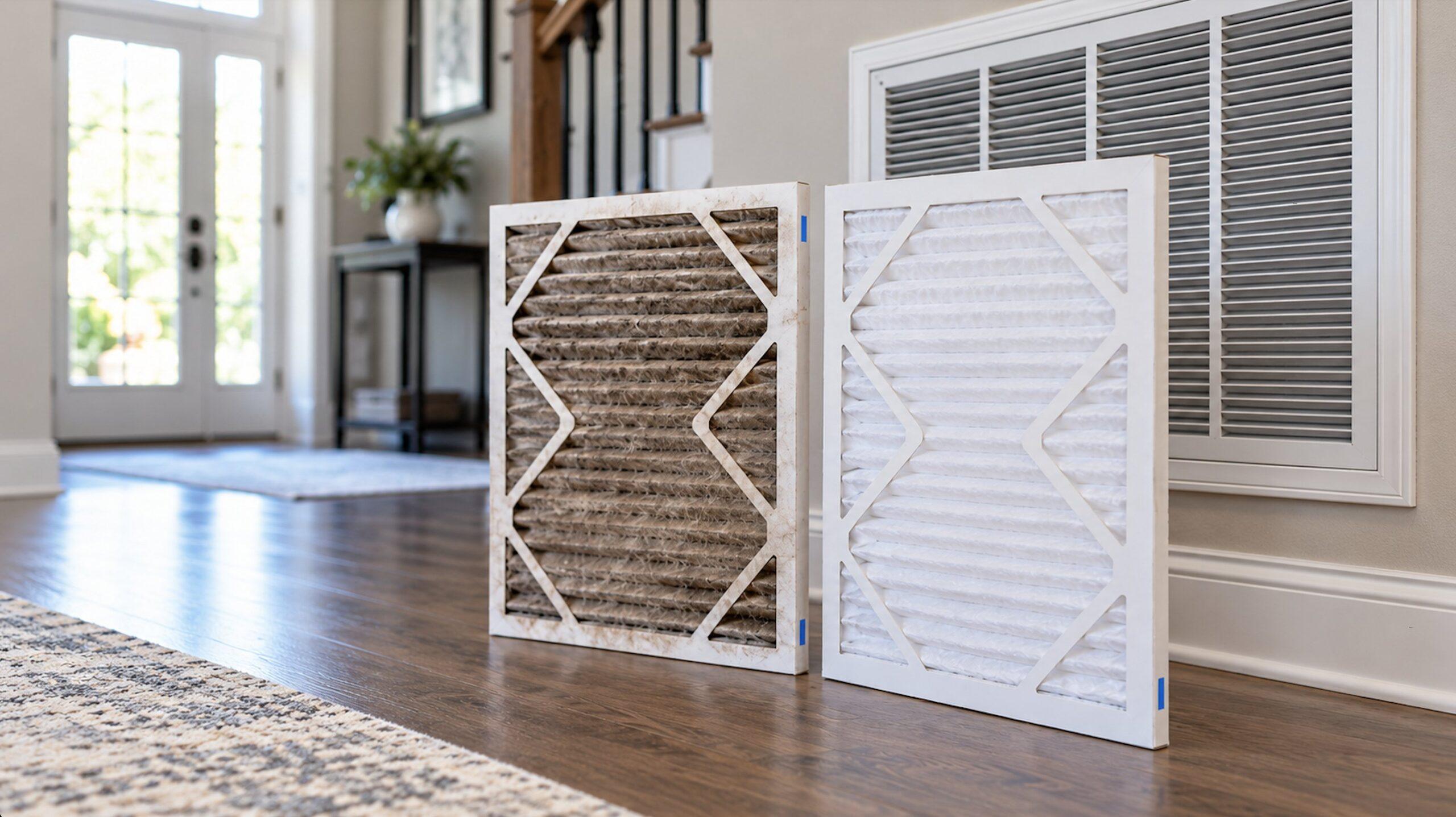
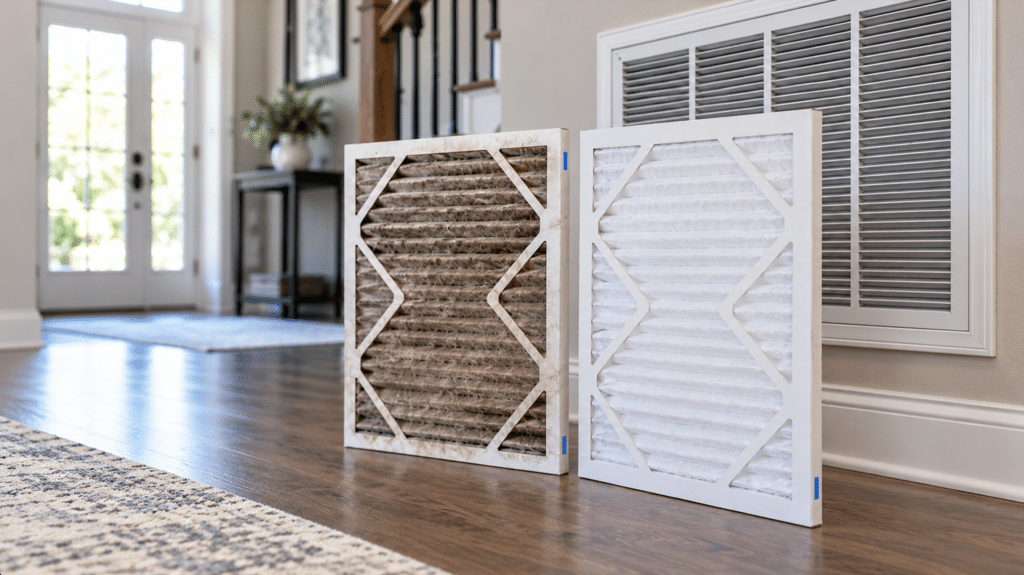
These are the flat, standard-sized filters you’ll find inside the return air grilles on your walls or ceilings, the ones most people are familiar with. They come in a wide range of MERV ratings, which measure how well they capture airborne particles. If indoor air quality is a broader concern in your home, explore our air quality services.
Here’s where homeowners often go wrong: they assume the highest MERV rating is automatically the best choice.
“A filter that creates too much resistance can restrict the airflow your HVAC system needs,” says Jeremy Lawrence, owner of Air Woodlands. “That matters because newer AC systems can be especially sensitive to airflow and static-pressure problems.”
In other words, a high-MERV filter that’s too dense for your system is essentially putting your AC in a chokehold, making it work harder, run longer, and wear out faster.
Media Filters
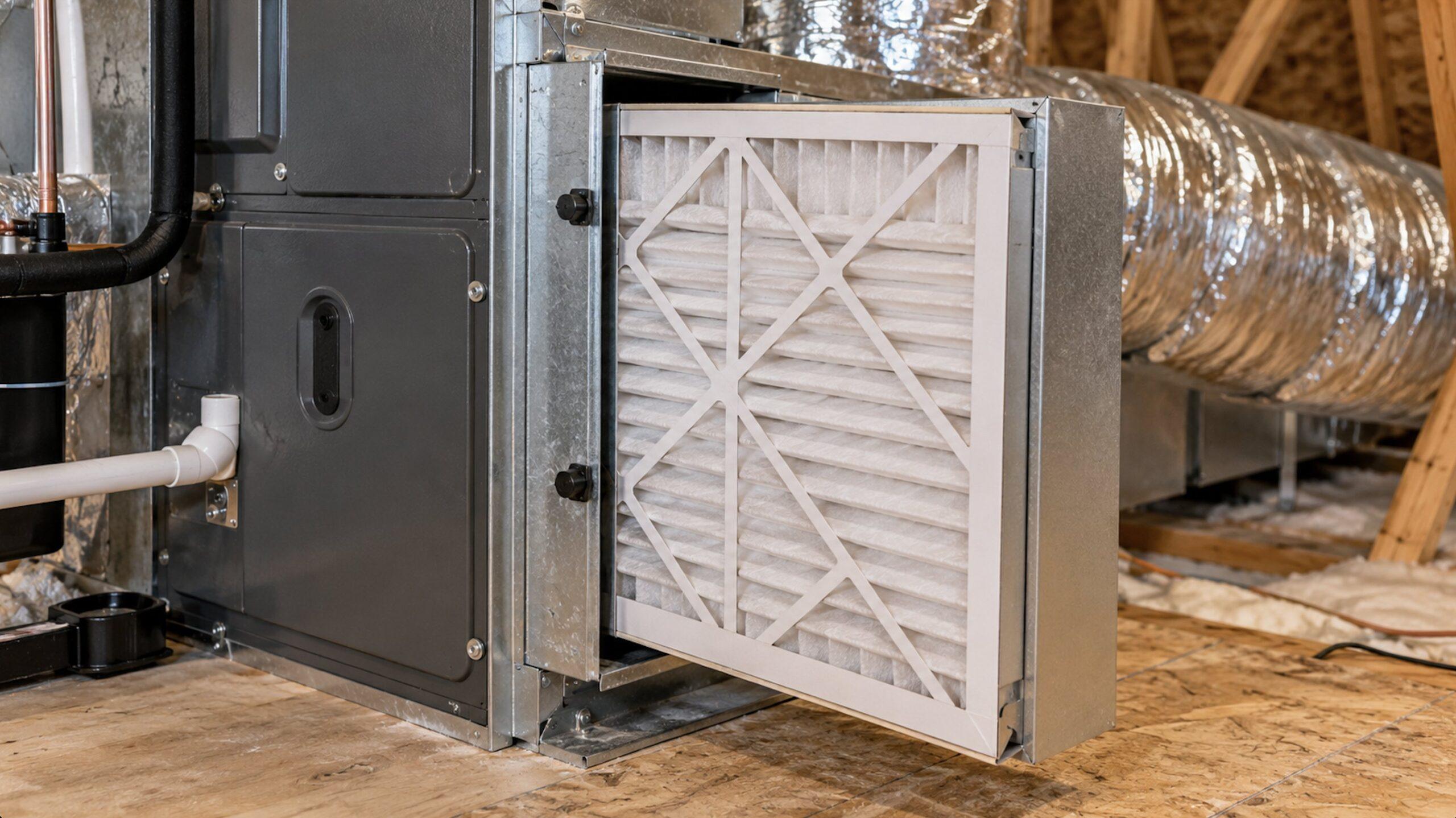
A media filter is the thicker, accordion-style filter, usually 4 to 5 inches deep, installed near your indoor air handler, often up in the attic. Because of their larger surface area, media filters can trap considerably more particles before they need to be replaced.
That extra capacity is a real advantage. But it also means you might go months without changing it, and not realize the filter is fully loaded until your system is already struggling.
How Often Should You Actually Change It?
This is the question everyone wants a simple answer to — and Jeremy is honest about why there isn’t one.
“There isn’t one perfect replacement schedule for every house,” he explains. “Pets, people, dust, system runtime, renovations, and the conditions inside your home all affect how quickly a filter gets dirty.”
That said, he does use a practical system for media filters that any homeowner can follow:
Check it at 6 months. Pull the filter out and take a look. If it’s really dirty, note that and change it. Next time, check at 4 months. If it’s still heavily loaded at 4 months, move your next check to 3 months.
You’re essentially letting your own home teach you the right schedule, because no two households are the same.
For standard 1-inch filters, monthly to every 90 days is a reasonable starting range, but again, your home’s conditions are the real guide. A household with two dogs and a dusty renovation underway needs more frequent changes than an empty-nester’s home with hardwood floors.
What Happens When You Wait Too Long
Skipping a filter change might seem harmless. But restricted airflow doesn’t just reduce comfort, it creates a chain reaction inside your system.
According to Jeremy, a clogged filter can contribute to:
- Frozen evaporator coils — reduced airflow causes the coil to get too cold and ice over (see our guide: why is my AC not cooling?)
- Higher static pressure — your system has to work harder to push air through
- Blower motor stress — extended strain shortens the motor’s lifespan
- Reduced comfort — rooms don’t cool or heat evenly
- Poor overall HVAC performance — efficiency drops, and so does your comfort
None of these problems announce themselves loudly. They develop gradually, quietly, until your system breaks down on the hottest afternoon in August, or the coldest morning in January. When that happens, Air Woodlands offers 24-hour emergency AC repair with no overtime fees.
The Real Goal: Good Filtration Without Starving Your System
Jeremy puts it plainly: “The goal isn’t the strongest filter you can buy. It’s good filtration without starving your AC system for air.”
That balance, between capturing enough particles to protect your air quality and maintaining enough airflow to protect your equipment, is what good filter management is really about.
It’s not a one-size-fits-all answer. It’s paying attention to your specific home, your specific system, and what the filter is telling you every time you pull it out.
Not Sure Where to Start? Air Woodlands Can Help.
Since 1978, Air Woodlands has been helping homeowners across The Woodlands, Spring, Tomball, Conroe, Magnolia, Montgomery, and surrounding North Houston communities get the most out of their HVAC systems, including helping them set up a filter routine that actually makes sense for their home.
If you’re not sure which filter you should be using, when to change it, or whether your system has airflow issues worth looking at, give us a call. We offer 24-hour service, and there’s no pushy sales pitch, just honest answers from a team that’s been doing this for nearly 50 years. Ask us about our HVAC maintenance packages that include filter checks with every visit.
📞 Call Air Woodlands today or schedule your service visit online.
We’ll make sure your system is breathing easy … all year long.
Frequently Asked Questions About AC Filter Replacement
How often should I change a 1-inch AC filter?
A standard 1-inch AC filter should be replaced every 30 to 60 days in most homes. In The Woodlands and the greater Houston area, where AC systems run heavily for 8 to 9 months of the year, erring toward the 30-day end of that range is smart — especially during peak summer heat. Homes with pets, allergies, or higher dust levels should change them monthly without exception.
How often should I change a media filter (4- or 5-inch)?
A 4- or 5-inch media filter typically lasts 6 to 12 months before needing replacement. Their larger surface area captures significantly more particles before becoming clogged compared to 1-inch filters. Jeremy Lawrence at Air Woodlands recommends inspecting yours every 6 months and replacing at least once a year — more often if you have pets or live near construction areas common throughout North Houston’s growing suburbs.
What MERV rating is best for a home AC system?
For most residential HVAC systems, a MERV 8 to MERV 11 filter strikes the right balance between air quality and unrestricted airflow. MERV 8 handles everyday dust, pollen, and pet dander well, while MERV 11 adds protection against finer particles like mold spores — a real concern in Houston’s high-humidity climate. Going higher than MERV 13 in a standard home system can choke airflow and strain your equipment.
Is a higher MERV rating always better for my AC?
No — a higher MERV rating is not always better. Filters above MERV 13 are designed for commercial or hospital-grade systems with the fan power to push air through that dense media. In a typical home AC system, an overly restrictive filter forces your blower to work harder, reduces airflow, and can lead to coil freeze-ups or premature equipment failure. Stick to MERV 8 to 11 unless your HVAC contractor has confirmed your system can handle higher.
Can a dirty AC filter cause my unit to freeze up?
Yes — a clogged filter is one of the most common causes of a frozen AC unit. When airflow is blocked, the evaporator coil gets too cold and ice forms on the coil, refrigerant lines, or both. If your AC is blowing warm air, icing over, or running constantly without cooling, a dirty filter is the first thing to check. Air Woodlands’ technicians see this issue regularly during Texas summers when filters go unchanged for months.
Do pets or more people in the home mean I should change my filter more often?
Absolutely. Pets shed dander and hair that loads a filter far faster than a pet-free home — a household with one or more dogs or cats should plan on monthly filter changes regardless of filter size. Similarly, more occupants means more skin cells, tracked-in debris, and cooking particles circulating through your air. A busy household of four or more people in The Woodlands should treat 30 days as the maximum, not the target.
What happens if you never change your AC filter?
Skipping filter changes leads to a chain reaction of problems: reduced airflow, frozen coils, overheating components, and eventually compressor failure — the most expensive part of any AC system to replace. Beyond equipment damage, a saturated filter can collapse inward and allow unfiltered air — and debris — to bypass directly into your system. In The Woodlands’ hot, humid summers, a neglected filter can turn a $20 maintenance step into a $3,000+ repair call.
How do I know if my AC filter is restricting airflow?
Common signs of a flow-restricting filter include weak airflow from your vents, rooms that won’t cool evenly, your system running longer than usual, or visible frost on the refrigerant lines near the air handler. You can also do a simple visual check — if the filter looks gray, packed solid, or you can’t see light through it, it’s past due. When in doubt, Air Woodlands offers free system checks and can assess whether your filter or something deeper is the culprit.